
RECORE™
Sustainability
What we leave behind
can become what comes next.
RECORE™ works at the intersection of agriculture, material science and design.
Our objective is to create higher-value applications for agricultural residue while developing materials suited to modern manufacturing.
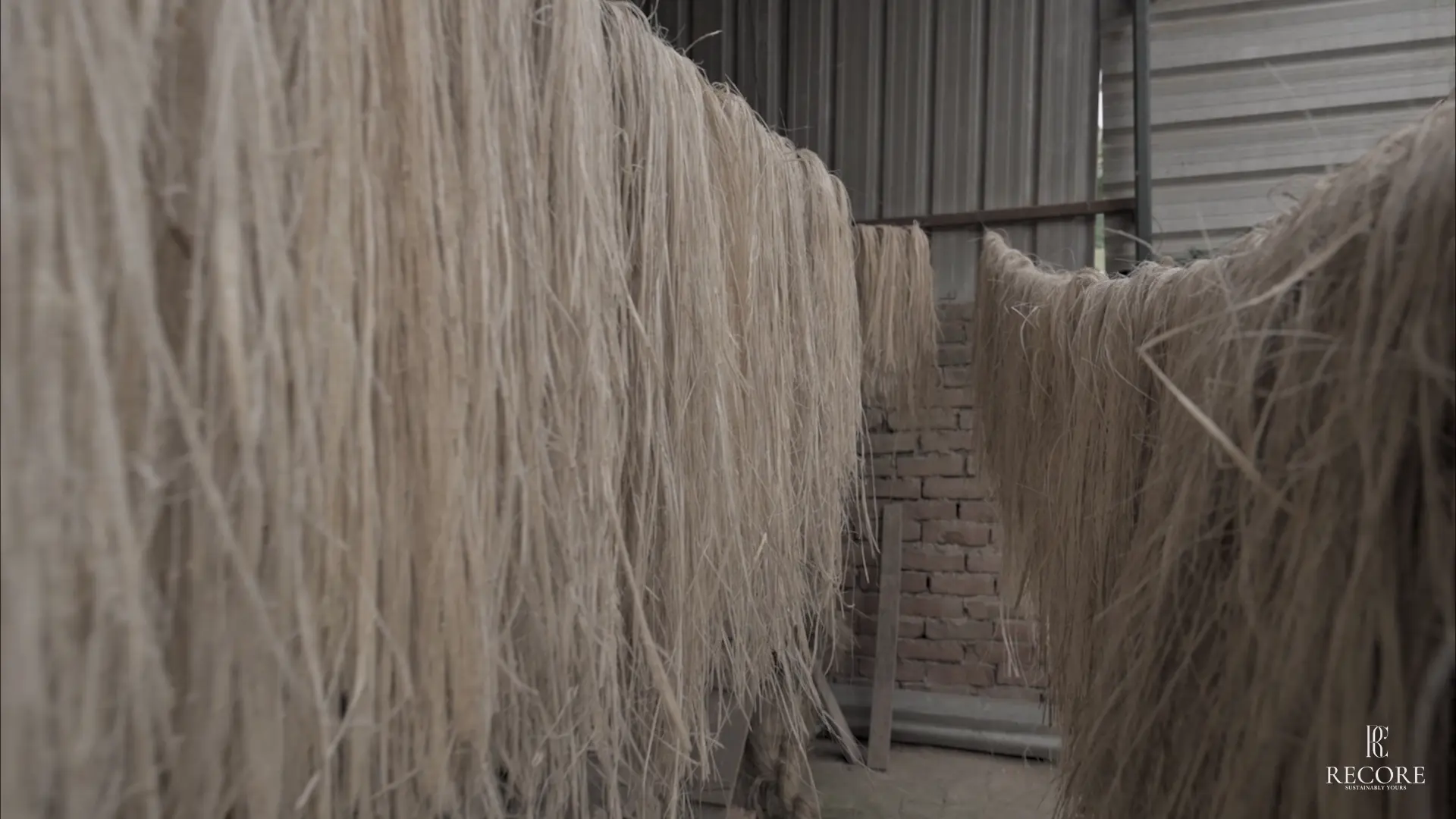
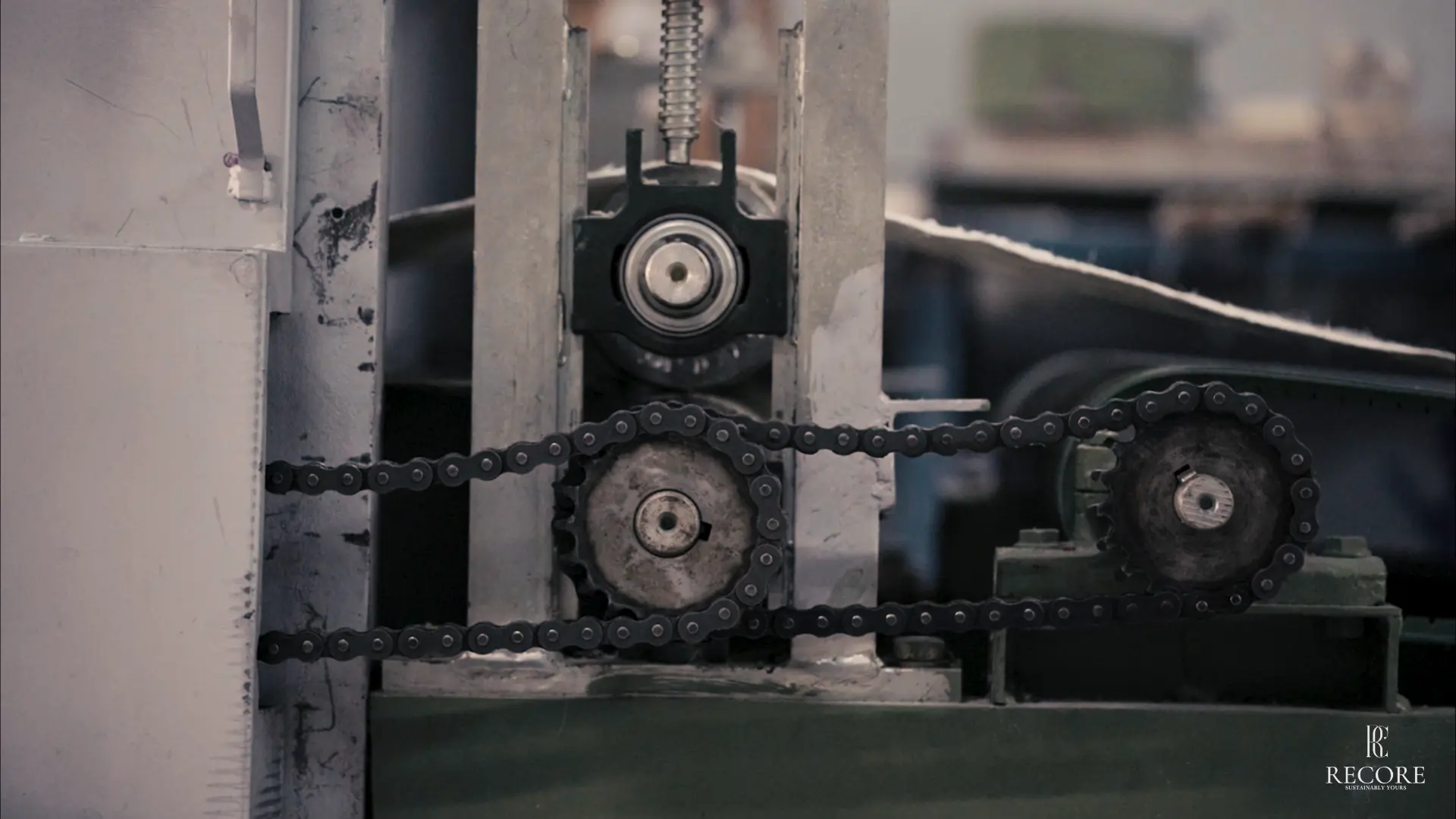
Starting with
what already exists.
Banana cultivation produces significant residual biomass after harvest.
Rather than viewing this material solely as waste, RECORE™ approaches it as a source of fibre and cellulose that can be processed into new material systems.
From waste stream
to value stream.
Agricultural residue
Pseudostems remain in the field after banana harvest.
Relative value 12%
Fibre & cellulose
Layer separation, extraction, washing and drying at collection level.
Relative value 38%
Material systems
Fibre converted into yarn, textile and leather-alternative formats.
Relative value 68%
Finished product
Materials specified into fashion, interiors, automotive and product design.
Relative value 100%
Residue
Applied material value
Relative value indicators are illustrative placeholders and will be replaced with verified figures as they are confirmed.
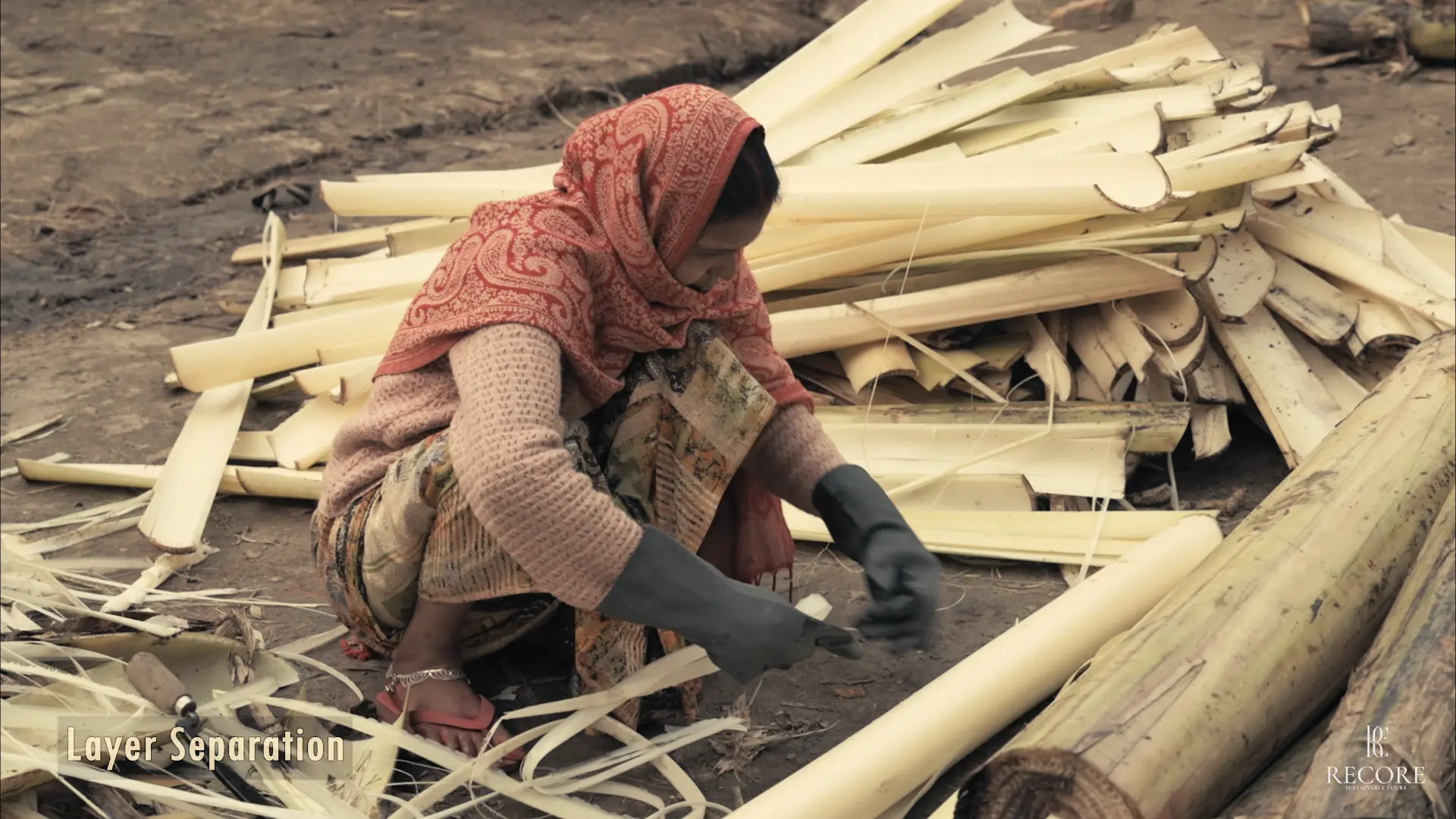
Rural livelihoods
Empowering
rural women.
Fibre extraction begins in the field — layer separation, cleaning and drying are skilled, hands-on stages of the RECORE™ supply chain, and much of this work is carried out by women in farming communities.
By creating demand for material that was previously left behind, RECORE™ aims to build steady, dignified income opportunities close to home — with training, safer handling practices and fair compensation as core commitments rather than afterthoughts.
Better materials.
Measured responsibility.
01
Resource efficiency
Directing existing agricultural residue toward higher-value material use.
02
Bio-based inputs
Material systems built around plant-derived fibre and cellulose.
03
Material innovation
Developing formats suited to established manufacturing processes.
04
Traceability
Understanding where raw material originates and how it is processed.
Validated material innovation.
Independent certification and compliance documentation for RECORE™ material systems.

Certification

Certification

Certification